

My journey into no-code
How “playing on the computer” led to a career in tech

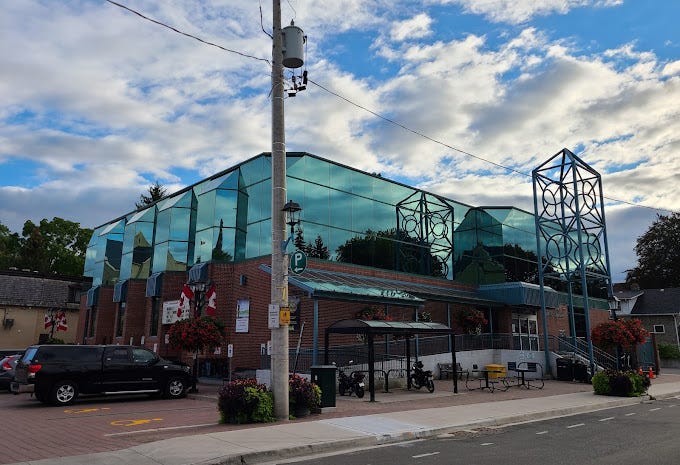
My first taste of the web was at our local library.
It was one of the few places we could go without spending money. That was a big deal for a working-class family like ours.
The kids section was on the second floor. We spent a lot of time there. They had a set of IBM workstations loaded with kid-friendly software.
If you wanted to get online, the librarian would log you in, boot up Netscape Navigator, and point you to safe websites.
Related: How Netscape Won and Then Lost the World Wide Web (Popular Mechanics)
We purchased our first family computer in the late 90s so we could get online without going to the library. My parents set it up on the big old bankers desk in their bedroom.
Accessing the web from home was a big deal. I was a voracious reader with an insatiable appetite to learn. (Still am.) The web was like an infinite library, and I was gluttonous for it.
That said, I was still a kid, and if I had to choose between reading about world history or Pokémon, Pokémon would win every time. So that’s where I started. I consumed every little rumour and bit of Pokémon info that I could find through Yahoo.
Building my first website
Inspired by all the sites I visited, I wanted to have a go at creating a site of my own. That led me to Max Pages.
Max Pages was one of the many “build a free website” services that existed at the time.
It was no drag-and-drop website builder. Instead, you had a series of settings screens to configure details for each page.
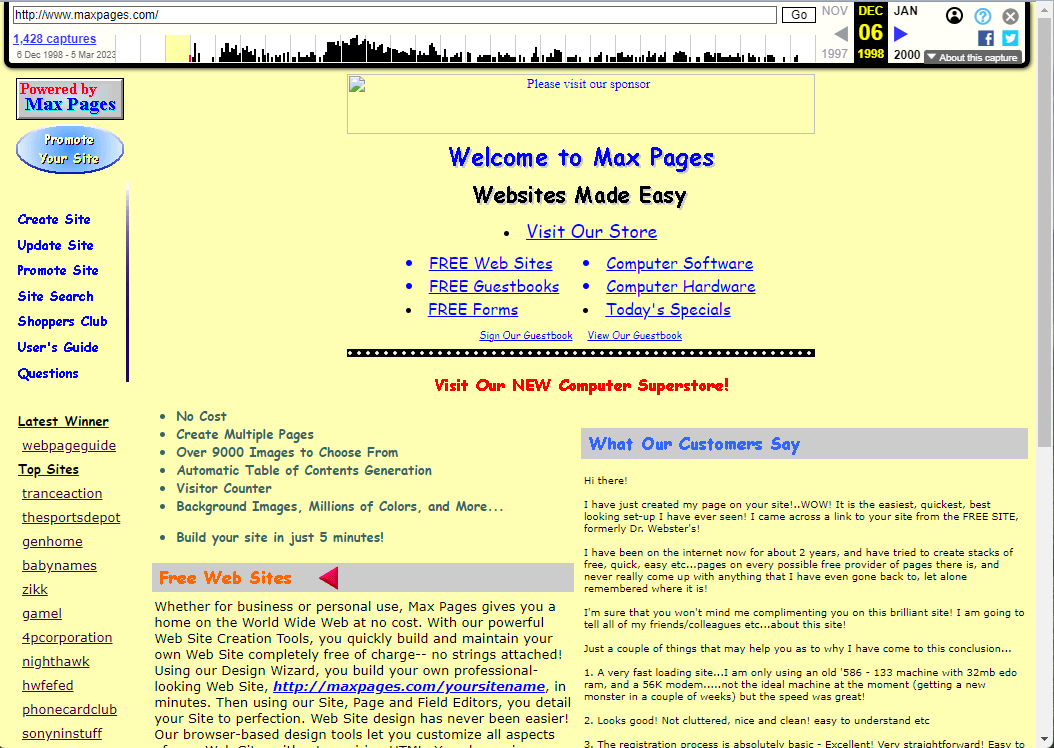
Title. Description. Background. Fonts. Colours. Page content. Embedded images. Music. Hit counters. Virtual guestbooks.
Even though it was over twenty years ago, these features weren’t far off from what you’d find in a website builder today.
Max Pages showed me how easy it was to build a website. But I wanted more freedom and control over what I built.
Netscape Composer was the solution. I can’t remember when I came across it, or how, but I do remember how easy it was to use.
I did most of my Netscape Composing on the new computers in our school library. I wasn’t working with servers yet, but I knew how to save files on network drives.
Thanks to that, I figured out how to build a webpage on one computer, and share it with a friend sitting at another.
The next step was FrontPage. We had just installed Microsoft Office on the PC at home. FrontPage was in there alongside Word, Excel, Publisher, and Access.
Related: Microsoft FrontPage 98 (Web Design Museum)
Like Composer, I could save webpages in FrontPage as files. So I figured out how to build webpages at home, save them to a floppy disk, bring the disk to school, upload the files to the school network, and open the pages in a browser.
I still hadn’t made the leap to “building sites on the internet”, but I was getting closer.
Forums and fansites
My final years of elementary school were a bit rough. Like other nerdy kids my age I found comfort through message boards. It went as far as volunteering to help with moderation and administration.
Those online communities introduced me to CSS, web hosting, and scripting. I learned how to look for classes and IDs in a page’s source code and tweak its appearance.
These were little things like font sizes and background colours. It wasn’t much, but heck, I felt powerful.
By this point I was confident enough to put my own web pages online. Unfortunately I didn’t know how to do it. So I asked!
Other community members pointed me to free hosting providers. These weren’t businesses like Angelfire or GeoCities. These were indie hosts, i.e. some other kid with a server in their bedroom.
Instead of purchasing an account, you'd fill out a form to make a polite request. If they approved, they would create a /~yourname/ directory and send you the FTP credentials.
So there I was, at 13 or 14 years old, building webpages in FrontPage and uploading them via FTP in Windows Explorer.
It wasn’t elegant, but it worked.
I started writing for fansites around the same time. One of those sites used NewsPro. NewsPro — later called Coranto — was a lightweight CMS written in Perl.
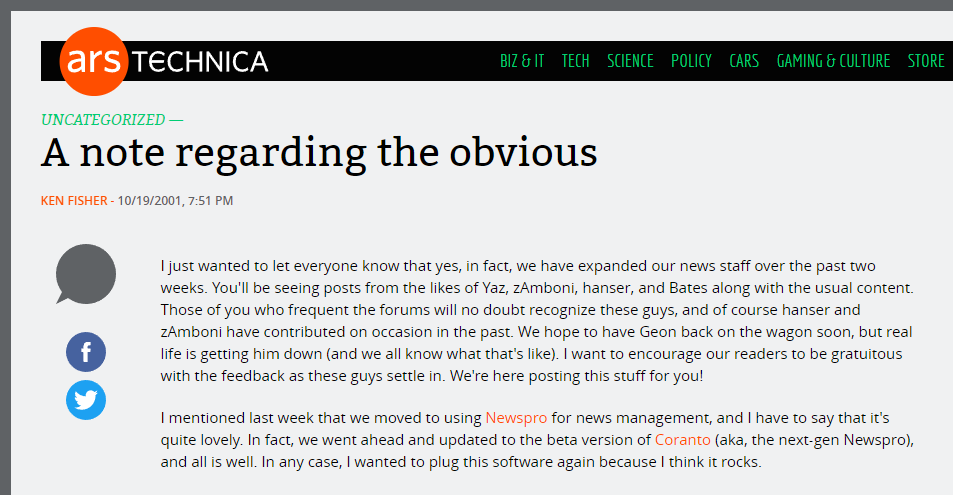
It was the first time I had ever worked on a website without needing to create and upload HTML files.
In time, thanks to a ton of tutorials, I learned how to combine my static FrontPage sites with CMSes like Coranto, followed by CuteNews, then Greymatter, and eventually TextPattern.
I didn’t know it in the moment, but I was building templates for these CMSes by remixing and reusing bits of existing code.
While tinkering with these sites I continued to volunteer in online communities. I absorbed quite a bit of knowledge from the more technical community members.
Even though I couldn’t write much code from scratch, they taught me how to read it, how to modify it, and how to talk about it.
Discovering WordPress
I left home for college in 2007. I chose Advertising as a career path because it felt like a nice blend of creative and business.
My volunteer work with the sites and forums continued. I had settled on TextPattern after testing dozens of CMSes.
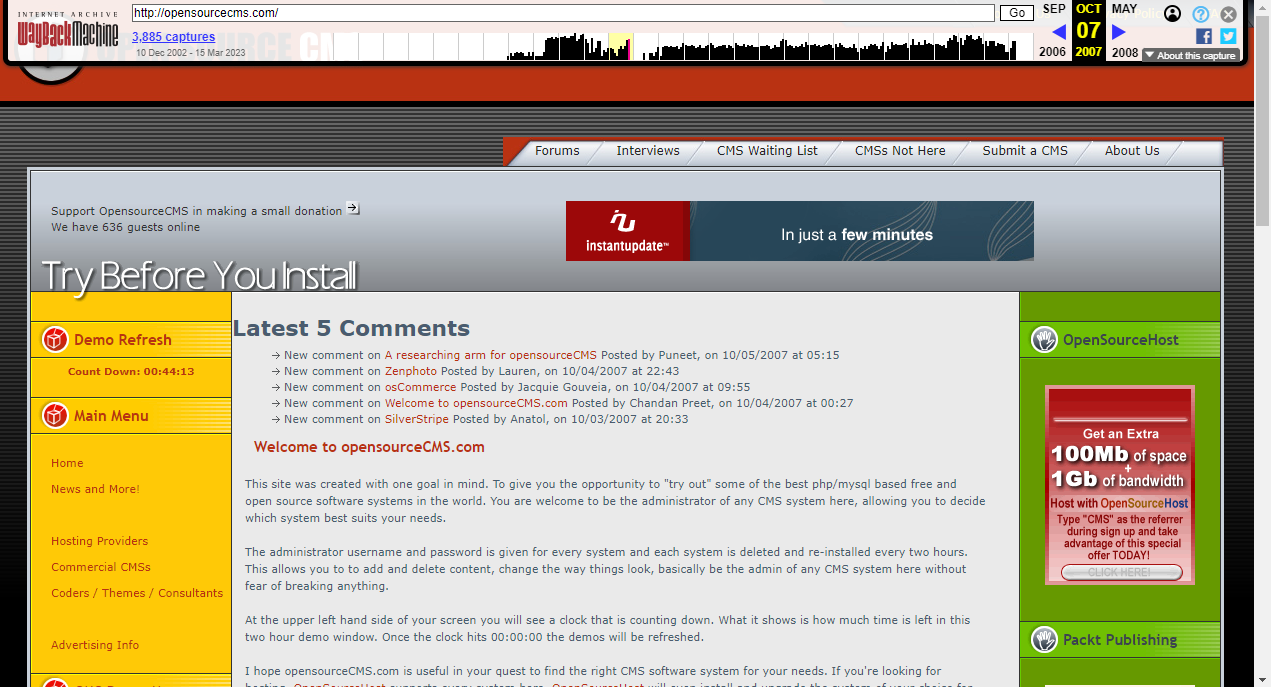
In my first year of college, one of my then-instructors introduced me to WordPress.
"WordPress is the best of everything", he said. “Most TextPattern developers are moving to WordPress.”
TextPattern let me take a static website and break it into parts to build custom themes or templates. WordPress was similar enough, so I followed my instructor’s advice and spent a summer between semesters diving into the WordPress Codex.
For some people, WordPress was their first step into full-stack web development. They'd start with few custom PHP functions for a theme. Then they'd write a custom WordPress plugin. Next thing you know, they’re building custom web applications in a weekend.
I wasn’t one of those people. I mean, I tried to be a “real” developer. But I also tried to avoid straight code and its complex mess of functions, references, and nested logic.
I was happy enough working with HTML and CSS, while leaving the more advanced stuff, like PHP and JavaScript, to others.
My lack of coding prowess didn’t stop me. I found a sweet spot with marketing sites. I could build a site in HTML and CSS, chop it up into a custom WordPress theme, and drop in some plugins or widgets for functionality.
Packaging this up as an affordable service was enough to get my first clients. So that’s what I did through my second year of college as the world rolled into a global recession.
***
For next week's update I’ll share how I pivoted from pursuing a career in advertising to a pursuing career in tech. Turns out knowing how to buy and sell print and broadcast media wasn’t much of a transferrable skill in 2009… 😬